
COVID rising
How to safely ride the summer swell

TL;DR: COVID is on the rise in the US and parts of Europe. The good news is that (so far) the levels are much lower than last summer. But if you are at higher risk, you might consider topping up your vaccine protection and/or taking other precautions.
Note: As I was writing this post I was sickened to hear of the shooting targeting the US CDC offices on Friday and of the police officer who lost his life. My heart and my eternal gratitude go out to these public servants who are risking so much for their dedication to public health.
COVID, I know what you did last summer
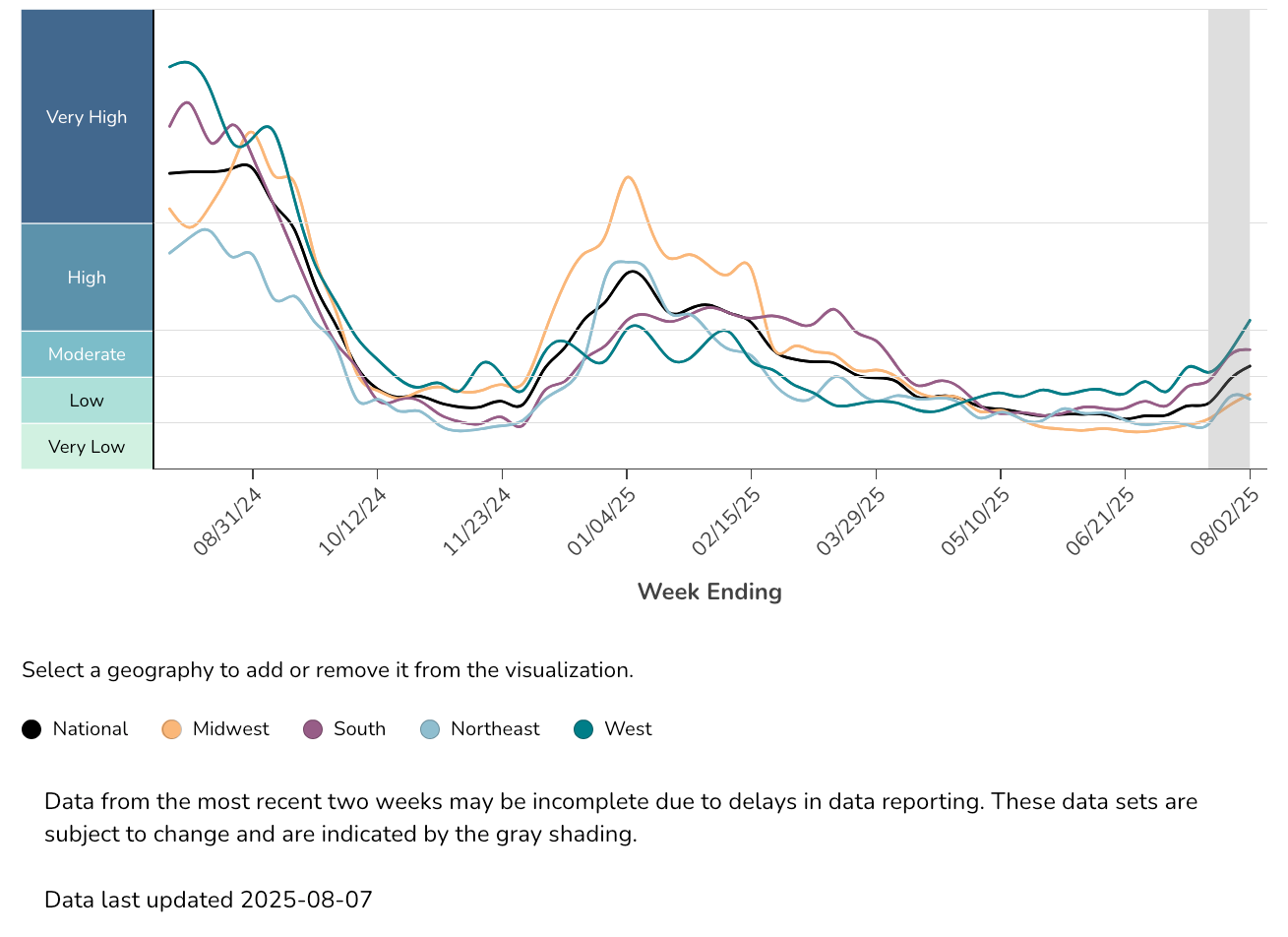
The summer 2024 COVID wave that lasted through early fall was a big one, peaking at an estimated almost a million infections per day in the US. This adds up to roughly a third of the whole US population being infected during that wave. This high level of population immunity coming out of fall may have contributed to a milder winter wave. However, protection wanes several months after infection or vaccination, which means that the number of susceptible people has been growing, leaving lots of dry tinder waiting for a new COVID spark. After a relatively quiet summer, we’ve started to see an uptick in the the US last few weeks:
Source: US CDC National Wastewater Surveillence System
Source: US CDC National Wastewater Surveillence System
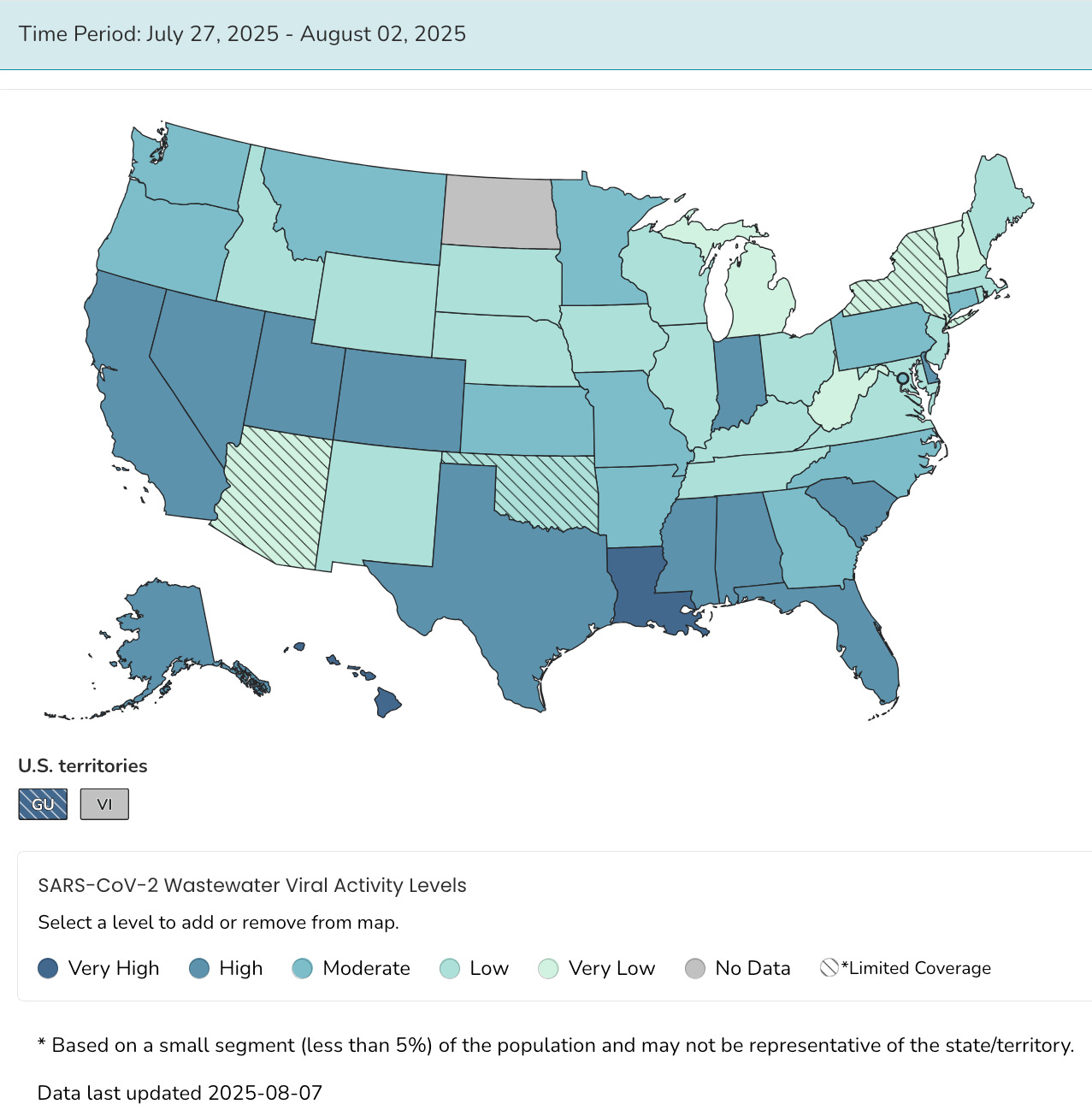
You can see this recent uptick in wastewater levels, with the Western states leading the way. As of August 5th, the CDC estimates that COVID-19 infections are growing in 45 states and stable in 5 states. Since the data are lagging by a week, it’s likely levels are already higher, with a predicted peak in early September, just in time for back-to-school.
In England, the summer wave has been simmering since June, but fortunately hasn’t taken off towards the heights seen last summer and fall (measured here by test positivity, which tends to move in tandem with other infection trends, including hospitalizations and deaths).
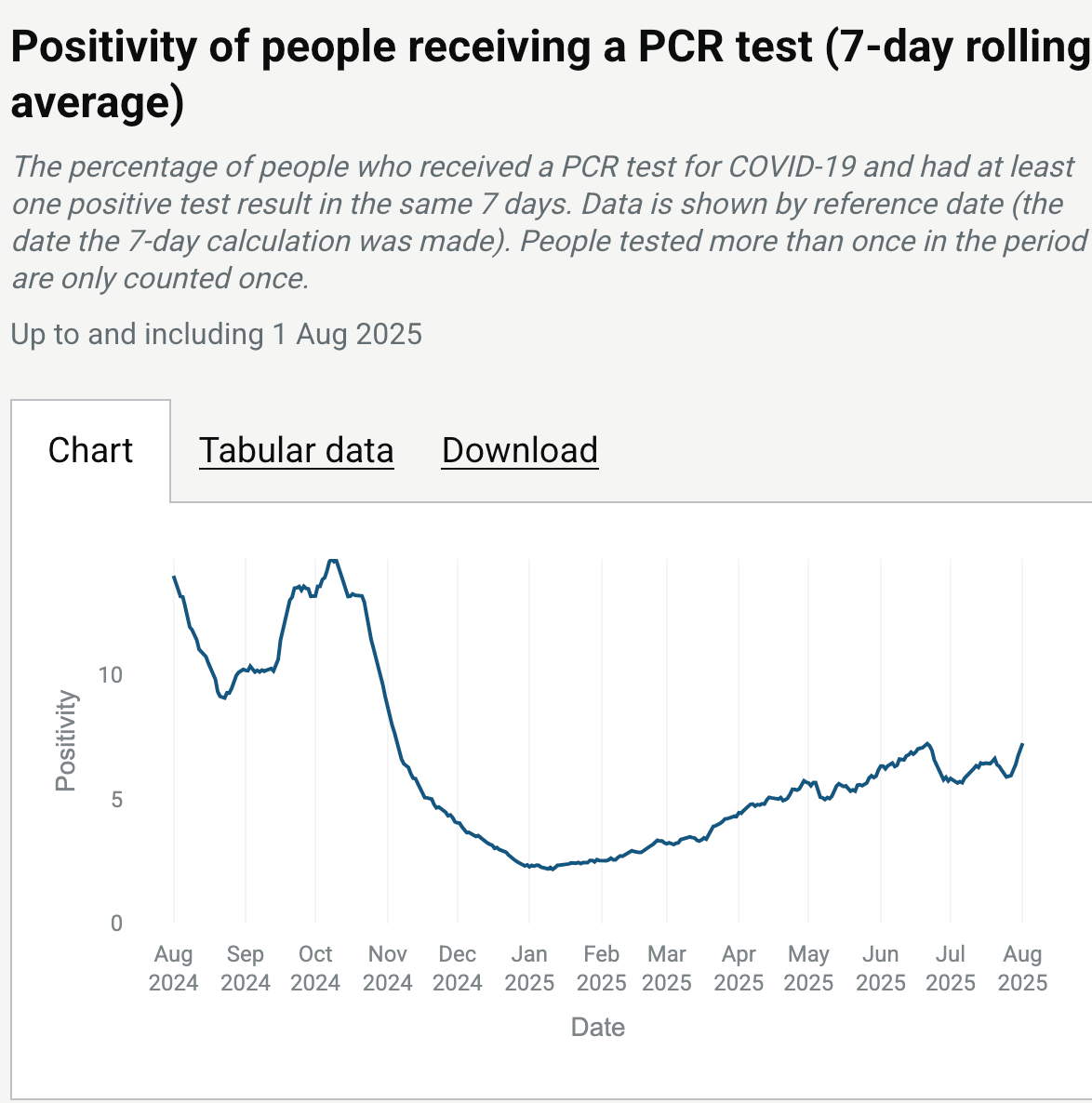
Data from NHS England. Source: UKHSA Dashboard
I’m currently on vacation with my family in Spain, where a more substantial summer wave may be cresting:
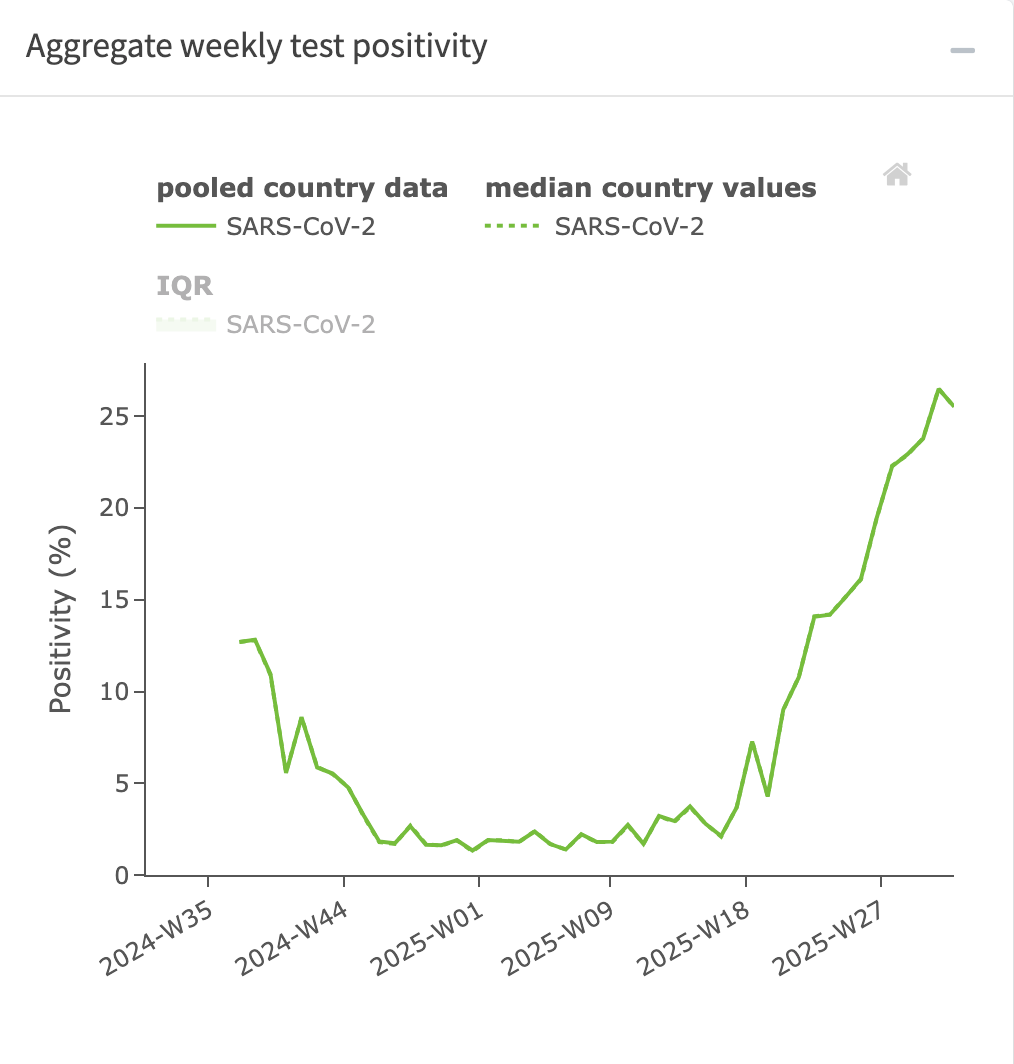
Test Positivity in Spain, through week ending August 2, 2025.
With cases rising, should I get a COVID booster now or wait until fall?
For those over age 65 or younger with a risk factor, a booster now could make sense, especially if you have upcoming travel or events. You can still get the updated version later in the fall to maximize holiday protection. But waiting is also a reasonable choice.
Like most things COVID these days, the choices are not clear cut. Since COVID-19 has not fallen neatly into a consistent seasonal pattern, optimizing the timing of protection is harder than a more predictable seasonal virus like the flu.
If those decisions weren’t challenging enough during the last five years, the US now faces uncertainty about who will be eligible to receive updated COVID vaccines this fall (read this great summary by Your Local Epidemiologist for the in-depth scoop). While the official recommendations are expected to change to include only those 65+ or with conditions that put them at higher risk, to my knowledge this change will not go into effect until the updated vaccines are rolled out in the fall (but please do let me know if this is not your experience on the ground right now!).
In the US, you are currently eligible for a dose of COVID-19 vaccine if:
1) You are 18 years old or over and never received the most recent (Fall 2024) COVID vaccine. Per the new CDC guidance, parents of children ages 6 months to 17 years “should discuss the benefits of vaccination with a healthcare provider.” With school starting soon, now could be a good time to have that discussion (you can bring along this previous post outlining the benefits of vaccination for kids).
2) You are over age 65 or immunocompromised and received your last COVID shot more than two months ago.
The value of a booster now depends on your overall COVID risk and what you have coming up over the next few months. Increasing age (especially >65 years) is still the strongest risk factor for severe COVID-19, regardless of underlying conditions. The vaccines raise neutralizing antibody levels and reduce the risk of COVID hospitalization, but protection is highest in the first few months, so staying up-to-date is most critical for this age group. If you are 65 or over (or immunocompromised), one option is to get a dose now and then get the updated vaccine in 3-4 months, before the usual uptick around the holidays.
This strategy could also make sense if you have upcoming travel or special events like weddings where your risk of exposure is higher than normal. Just remember that it takes about two weeks to ramp up your antibodies, and you’d want protection a week or two before you travel so you don’t get sick right before your trip. You can also take extra precautions leading up to a big trip or family event. The current vaccine will still give a sizable boost in immunity to the currently circulating variants, especially in the near term. Since the circulating variants are still descendants of the JN.1 lineage used in the 2024-25 vaccine, the difference in protection from the update in formula this fall is not likely to be large. The FDA has recommended that the 2025-26 COVID vaccines target a JN.1-lineage, preferably the LP.8.1 strain.
It’s reasonable to wait for the updated shot if you’ve already had one dose in the last year and don’t anticipate higher than expected risk of exposure. If you also had a COVID infection in the past year, your protection may stretch out a bit longer. As we get further into this “limbo” phase approaching the updated vaccines, there is no strictly right or wrong answer.
With cases rising, here are some things besides vaccines you can do to lower your risk of contracting and spreading COVID-19:
Mind that ventilation– the virus travels by air! Socialize outside when possible, open windows, and use HEPA filters.
Dial up your strategic masking.
Stay home if you feel sick and limit your interaction with others.
Test for COVID if you have symptoms, a known exposure, or before visiting someone with higher risk.
Looking at the COVID numbers in Spain, I decided to wear a mask on the plane to lower the chances of falling sick early in my vacation. From there, I plan to enjoy my tapas in the great outdoors as much as possible, but also enjoy the culture and food wherever that takes me. It’s OK to take some precautions some of the time. When it comes to infectious disease prevention, don’t let the perfect be the enemy of the good.
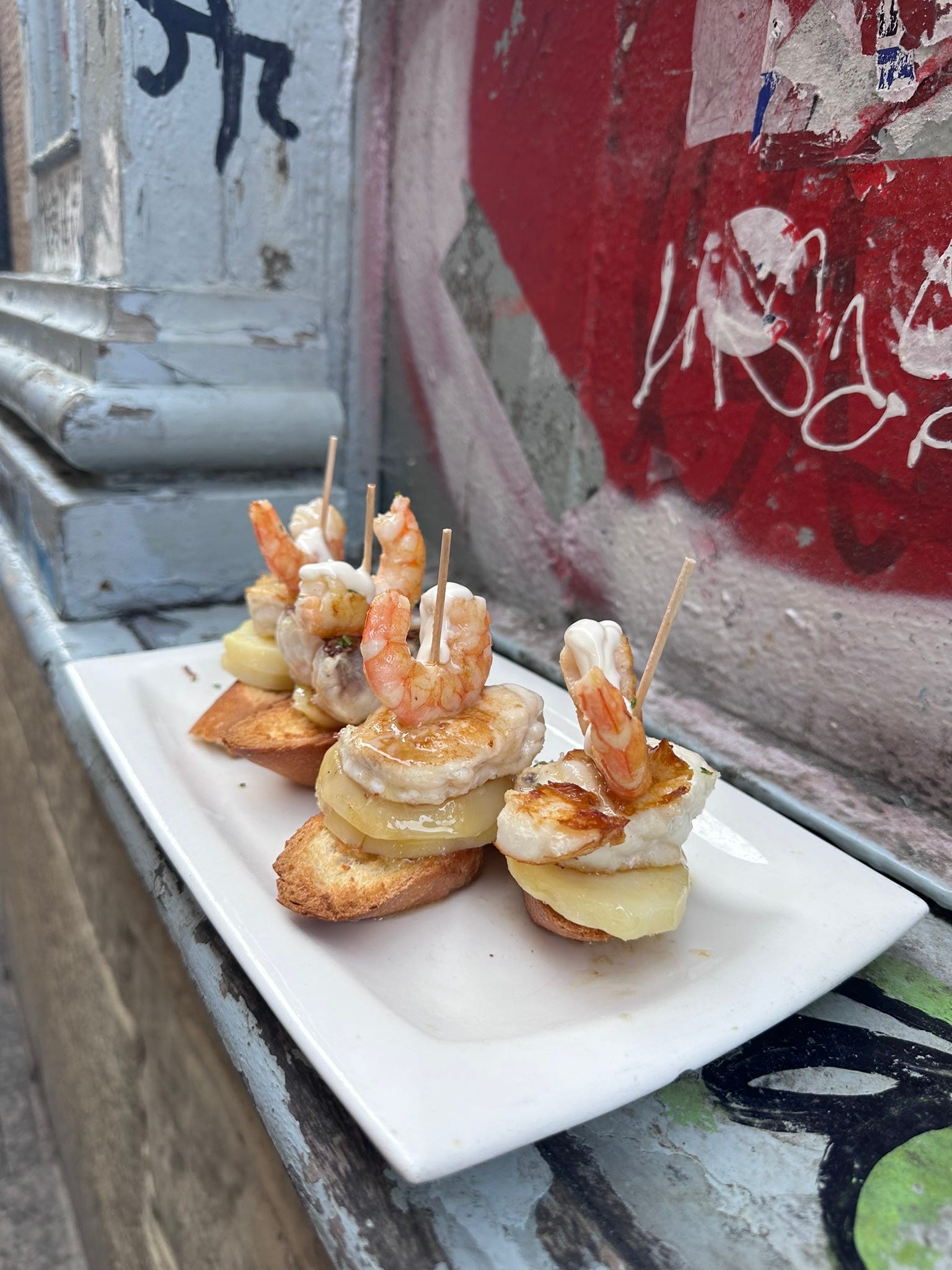
San Sebastián, te amo….
Stay well, and enjoy the last days of summer!
Jenn