
When “Stuff Happens” After Vaccination
How scientists separate coincidence from true side effects

TL:DR: With our health, “stuff happens” every day. But in science, coincidence is not the same as causation.
To separate out a real signal from background noise, we look for whether an adverse event is happening above and beyond normal baseline rates.
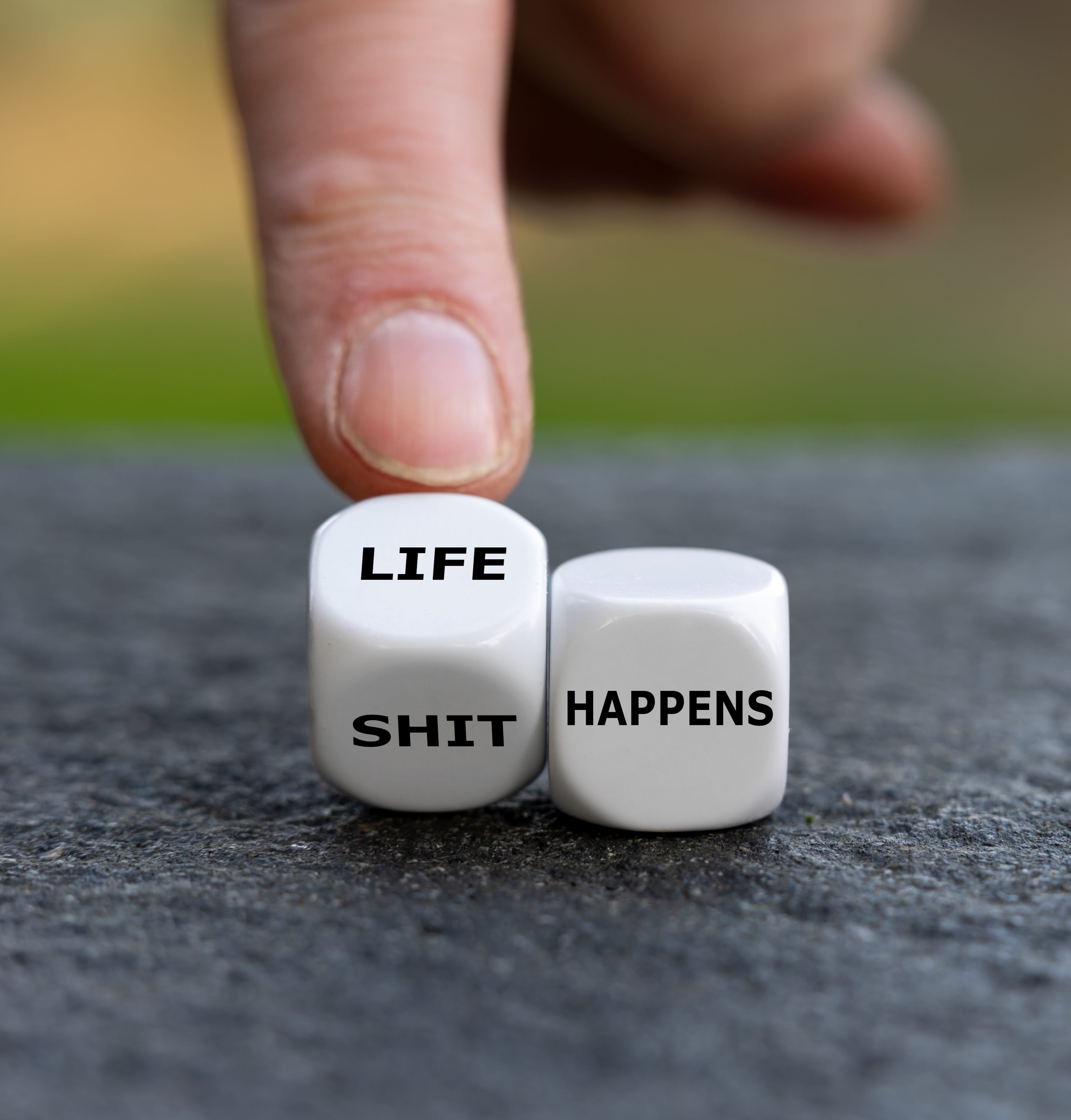
With the news that the administration plans to link the COVID vaccine to child deaths using data from the Vaccine Adverse Event Reporting System (VAERS), it’s worth revisiting how we actually detect whether a vaccine is causing harm.
When something bad happens, we want answers.
There is a good reason we collect data to learn about health rather than relying on stories from our friends and neighbors. Humans look for patterns & meaning in everything from cloud formations, burnt toast, or the socks they are wearing when their favorite team wins. Especially after something tragic, we are quick to ascribe the cause to something that happened shortly before. I’m not immune to this instinct, even with years of statistical training.
But here’s the tricky part: stuff happens every day. Rain falls, fevers rise, bones break, lotto numbers hit, hearts stop. Some of it will happen soon after vaccination, purely by chance. In one notable “adverse event,” a participant in the original Moderna COVID trial was struck by lightning after vaccination.
So how can we distinguish the “stuff” that happens from daily life versus a new vaccine? First, we look at biological plausibility- which means we can rule out that vaccines cause lightning strikes. For other health events, the detective work is more subtle. We need to compare the rate of adverse events to what would happen without the vaccine--the background or baseline rate.
That’s why clinical trials include placebo groups. They give us a “counterfactual”-- what happens when people don’t get the vaccine. In the Pfizer trial for kids aged 5-11, “fatigue” was reported by 34% of vaccine recipients after their first dose. This might sound like a big negative effect of the vaccine--until you compare it to the 31% of placebo receipients who reported fatigue. Reported headaches were actually higher (24%) in the placebo group compared to vaccine group (22%). In other words, a LOT of headaches, fatigue, and other things happen to people whether they get a vaccine or not. To attribute an effect (good or bad) to the vaccine, we calculate the difference in the rate between vaccinated people and the normal baseline rate. You can see in the figure below that for the second dose, these symptoms were more common in the vaccine group, even though they happened in both groups.
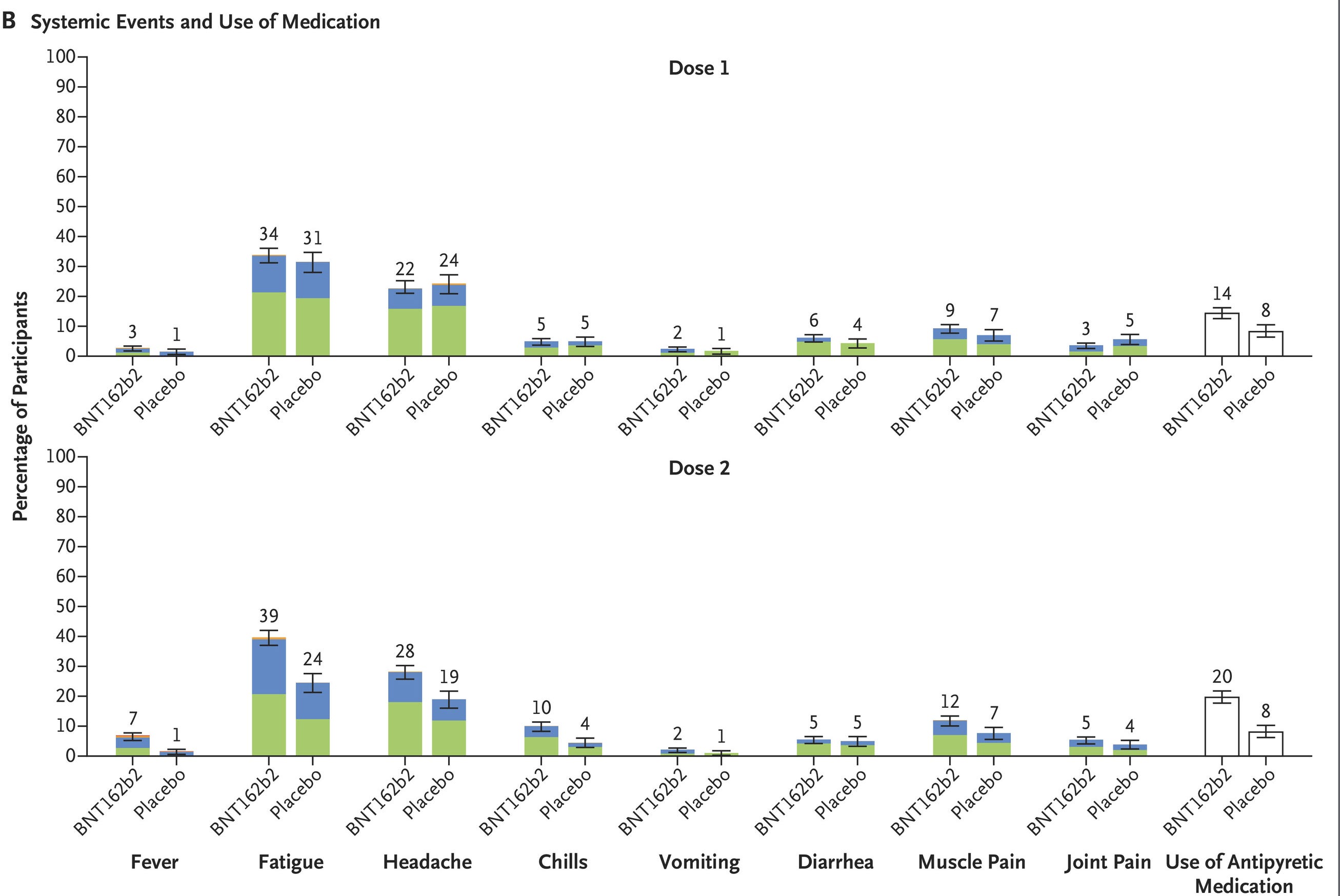
Side effects from the Pfizer (BNT162b2) vaccine vs. placebo. Source: Walter EB et al, 2022. Evaluation of the BNT162b2 Covid-19 Vaccine in Children 5 to 11 Years of Age. New England Journal of Medicine.
After the Rollout
Once a vaccine is approved, we don’t have built-in placebo groups anymore. Instead, we watch carefully for any adverse events that happen more often than expected in everyday life. And because life happens, even after vaccination, it’s guaranteed that bad stuff will happen.
For example in the US, there are about 19 sudden deaths per 1 million children aged 1-17 each year (pre-COVID data). Over 30 million kids aged 17 and under received at least one dose of the COVID vaccine. With this baseline rate and 30 million vaccinations, you’d expect around 22 child sudden deaths within two weeks of their vaccination, just by chance. While this sounds super scary and triggers our natural desire to attribute a cause to tragedy, these deaths are in fact similar to getting struck by lightning or getting in a car accident after a vaccine—coincidental timing, but not related to the vaccine.
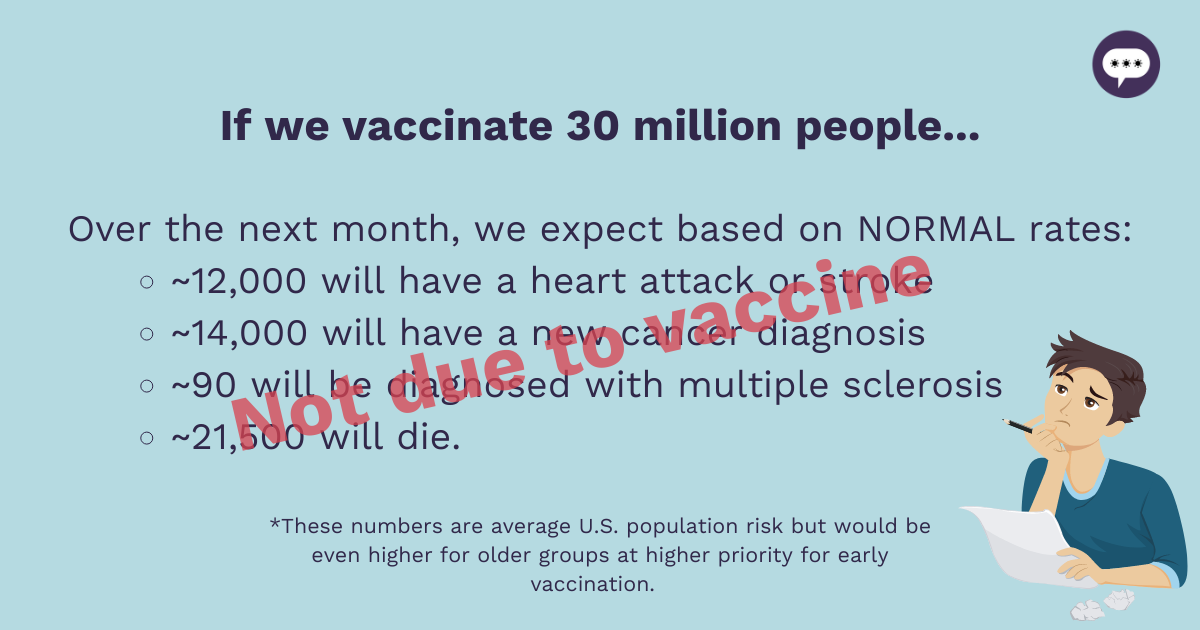
A slide I made way back in January 2021…some points evidently bear repeating!
Scientists monitor the safety of vaccines carefully through a variety of surveillance systems. When an adverse event does come up as happening more frequently than would normally be expected, this gets attention and investigation. This process works. It’s how we identified rare side effects like myocarditis after mRNA vaccines and blood clots after the Johnson and Johnson vaccine and Astrazeneca vaccines. Read this great post from Unbiased Science for a good run-down on different types of vaccine monitoring in the US and the strengths and weaknesses of VAERS.
Bottom Line
COVID vaccines have been rigorously monitored for safety from the original trials through real-world roll-out. The evidence overwhelmingly shows that deaths among the vaccinated were much lower than deaths in the unvaccinated, at all ages.
So no matter what misleading claims you might see, don’t be fooled by scare tactics that are meant to undermine trust rather than keep you safe.
Life happens...and more life gets to happen with vaccines than without.
Stay well,
Jenn