
Coughing So Hard You Vomit: Whooping Cough Is No Joke
A third baby has died in Kentucky...parents & grandparents, check your Tdap status!

TL;DR: Pertussis (aka whooping cough) infections are on the rise. Pertussis is extremely contagious and very dangerous to infants. It is also vaccine preventable.
There are few things more tragic than babies dying of a preventable disease. But when adults mix politics with science, it’s usually children who pay the highest price.
Whooping cough cases are on the rise nationally and globally. Last week, a baby in Kentucky died of pertussis, the 3rd such death in the state in 2025. Of the three infant deaths, none of the babies or their mothers had been vaccinated against pertussis.

Source: iStock, LSOphoto
“Violent” coughing fits, broken ribs, and more
Whooping cough (pertussis) is an infection caused by the bacteria Bordetella pertussis, spread through the air by coughing and sneezing. Once inhaled, the bacteria latches on to the tiny, hair-like projections in the upper respiratory tract (called cilia), which help clear mucus and other junk from the airway. The bacteria release a toxin that causes the cilia to swell, making clearing out the lungs particularly challenging. This leads to the characteristic high-pitched “whoop” sound of the cough as the person gasps for breath.
The coughing fits associated with pertussis are often called “violent,” sometimes leading people to vomit while coughing, break the blood vessels in their eyes, and even break ribs from coughing so hard. It’s also called the “100-day” cough because symptoms often last for weeks or months.
From this description, you can see why pertussis is so dangerous for newborns, who are easily infected by older children or adults. Rather than coughing, babies may have long pauses in breathing (apnea), turn blue, struggle to feed, or simply become exhausted. A sizeable fraction of babies infected with whooping cough require hospitalization.
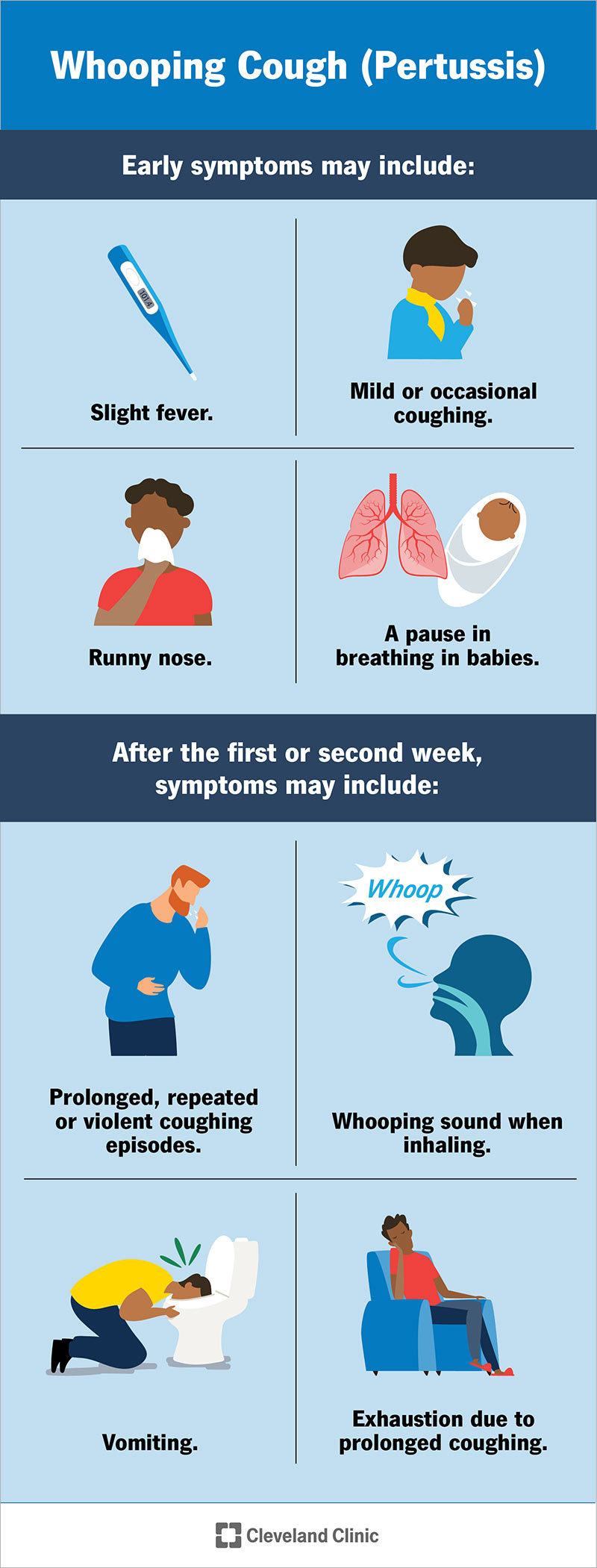
Source: The Cleveland Clinic
Newborns Rely on a “Cocoon” of Protection
Babies don’t start their pertussis vaccination until two months old. That means their protection depends on a “cocoon” of vaccinated adults and children around them.
Here’s how we build that cocoon:
➡️ During Pregnancy
Mothers should get the Tdap vaccine in the third trimester of every pregnancy (27-36 weeks). This boosts maternal antibodies that cross the placenta and protect newborns in their first vulnerable weeks (read more about this amazing maternal gift here). Antibodies passed through the placenta peak late in pregnancy, so timing in the last trimester several weeks before delivery is optimal.
➡️ Childhood
Young children should receive a series of 5 shots (the DTap vaccine) starting at 2 months and finishing between 4-6 years of age. This directly protects kids and their newborn younger siblings.
➡️ Adolescence
Adolescents should get one shot of Tdap when they’re 11 or 12 years old, which covers three diseases: tetanus, diphtheria, and pertussis.
➡️ Adults
Adults should get a dose of Tdap every 10 years. People who had a tetanus booster (aka Td booster) within the last 10 years but never had the Tdap vaccine, should get Tdap now, especially if you ever spend time around newborns.
➡️ New Grandparents + Anyone Around Newborns
Make sure you are up-to-date on their Tdap shot, and getting an earlier booster may not be a bad idea, since vaccine effectiveness wanes substantially over time.
You can get Tdap at most pharmacies, OB/GYN offices, or primary-care clinics.
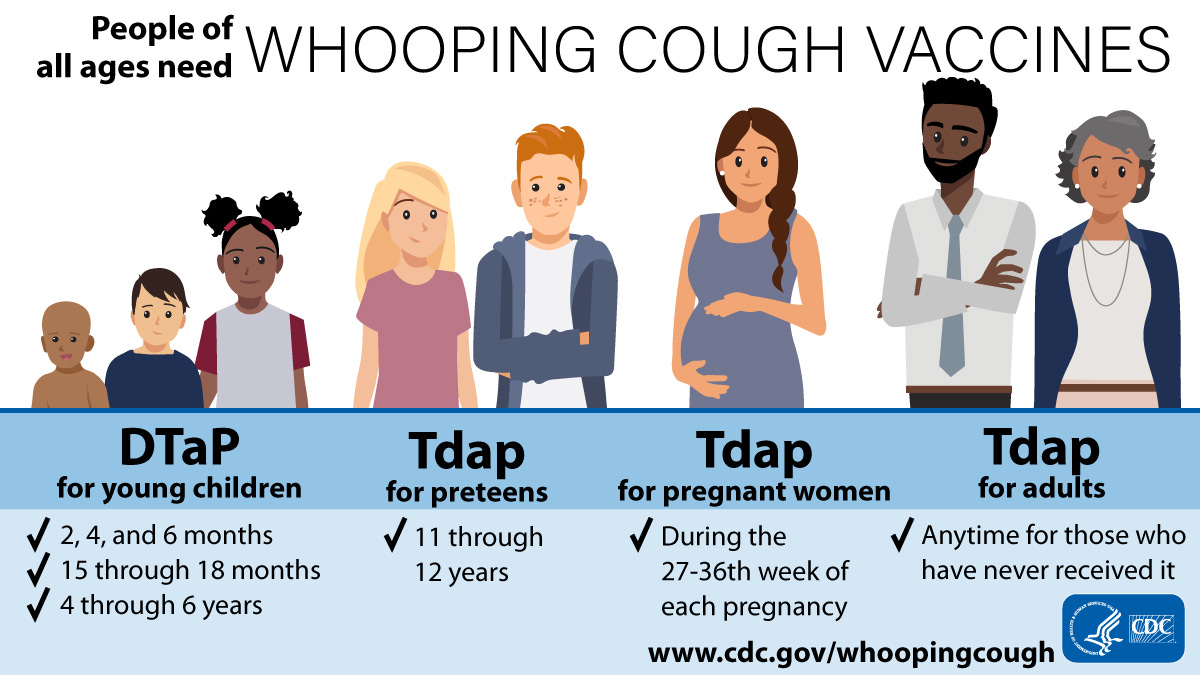
Source (a graphic that hasn’t yet been tampered with by the CDC).
Is There a Treatment for Pertussis?
Pertussis can be treated with antibiotics, but timing is everything. Early symptoms of pertussis start out like a cold, with a runny nose, mild cough, and low or no fever.
Antibiotics work best during the early “cold-like” stage, before the coughing fits begin. Antibiotics can help stop the spread of the infection, but isn’t great at treating the cough itself, which is why vaccination is so important. If someone in the household gets pertussis, doctors often give preventive antibiotics to close contacts (even if vaccinated) to protect infants.
Bottom Line: Protect the Babies (and yourself)
If you’re pregnant, schedule a Tdap shot between 27–36 weeks.
If you’re a grandparent or caregiver, get a Tdap booster before the baby arrives.
If you’re coughing, stay away from newborns
For everyone else, check that you are up to date on your Tdap vaccines and consider a booster if it’s been more than ten years or you can’t remember.
Just say no to the 100-day, rib-cracking cough!
Stay well,
Jenn
ICYMI:
Mom’s Antibodies Protect Babies After Birth

TL;DR: Maternal antibodies cross the placenta and protect babies from infections in their most vulnerable early months. If you (or a loved one) are pregnant, make sure to get the recommended vaccines in your second or third trimester.Data for Health is a reader-supported publication. To receive new posts and support my work, consider becoming a free or…
Further Links:
Children's Hospital of Philadelphia: Pertussis
Whooping Cough (Pertussis): Symptoms, Treatment & Prevention
