
It’s not too late to get your flu shot
…even if you already had the flu.

TL:DR:
The flu season can linger through May, so it’s not too late to get your vaccine.
If you already had the flu, the shot can still reduce your risk of catching one of the other strains (the “tri-valent” vaccine covers three).
This year’s flu vaccine reduces risk of severe disease, even against the new subclade “K.”
If you’re like me, you know lots of people who’ve been laid low with the flu over the last few weeks. With recent holiday gatherings and travel, that number is likely to grow even more.
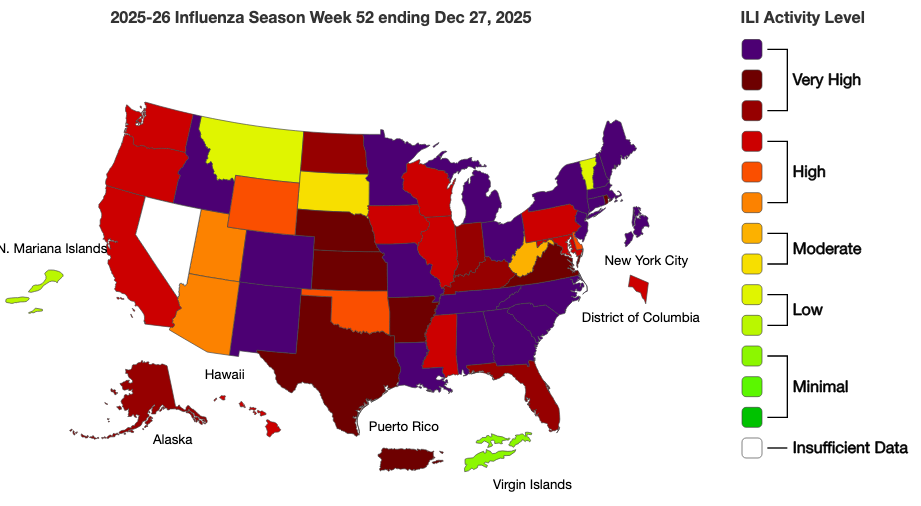
A red hot flu season. Source: https://www.cdc.gov/fluview/surveillance/2025-week-52.html
If I missed getting a flu shot in the fall, is it too late?
It’s not too late! As the saying goes, the best time to get your flu shot was two months ago, but the next-best time is NOW. Comparing flu activity to last year (blue line below), we likely still have a lot of infections ahead of us this season. Don’t hesitate to go grab one at the pharmacy if you haven’t already.
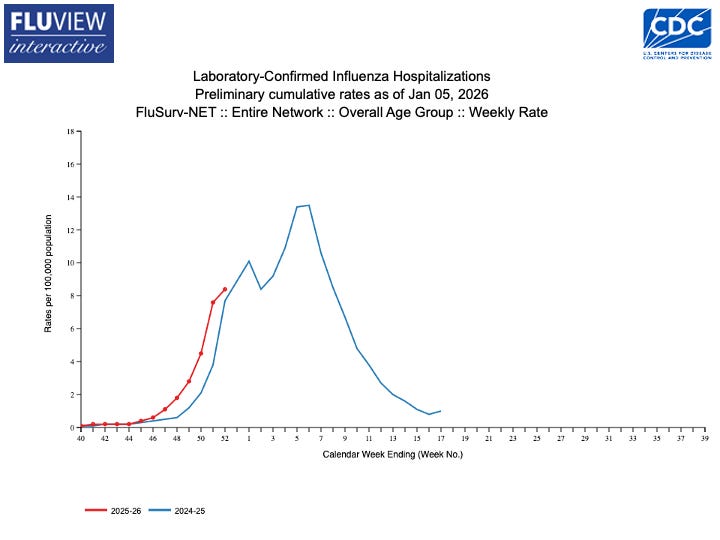
We probably still have a lot of flu ahead of us. Source: https://www.cdc.gov/fluview/surveillance/2025-week-52.html
There is a new flu variant in town
You may have heard about the new subclade “K” of the flu that emerged from Australia this summer (read this great post from Dr. Angela Rasmussen for an immunologist’s take, just don’t call it a “superflu”!). So far, most (94%) of flu samples tested in the US have been Influenza A, and among A subtypes, around 15% were H1N1 and 85% H3N2, mostly the new subclade K. This version of H3N2 has acquired some immune-evading mutations (as viruses do) that make the vaccine-induced antibodies a less effective match for blocking the virus. While this immune evasion may make it easier to catch, so far, there isn’t evidence that the resulting flu is more severe. Given the lag time for making flu vaccines, this type of vaccine mismatch is not uncommon, but the flu vaccine remains effective at reducing disease severity (the thing we really care about).
Early data from this flu season in the UK estimated that the 2025/26 vaccine was 70 to 75% effective at preventing hospitalization in children aged 2 to 17 years and 30 to 40% effective in adults, even against this new variant. While we’d love 100% protection, most of us would jump at the chance for any other medication (or supplement) that reduced the chance of our kids (or ourselves) ending up in the hospital by this much. Sadly, only around 42% of eligible US children and adults have been vaccinated, despite the particularly deadly flu season that killed 300 kids and tens of thousands of adults in the US last year. There are enough risks in the world we don’t have much control over, let’s not leave good protection on the table when we have it!
Should I get the flu shot if I already had the flu?
Yes. The flu shot protects against 3 strains, and you would NOT want to catch it again! It’s hard to know for sure which flu strain you got or which one will be dominant in the next few months. Go ahead and get that shot even if you had confirmed or suspected influenza. It’s safe to do so once you have fully recovered from your illness.
The current flu vaccine is “trivalent” meaning it protects against three different flu viruses–two influenza A viruses and one influenza B virus. So far this season over 96% of specimens tested by US public health laboratories have been one of the two strains of Influenza A, but the balance of circulating subtypes can shift over time (see last year’s timeline below). So, while a recent infection should give you near-term immunity against the specific strain you had, you still have a chance of getting exposed to a different strain in the next few months. Flu levels are high right now but can easily last through May.
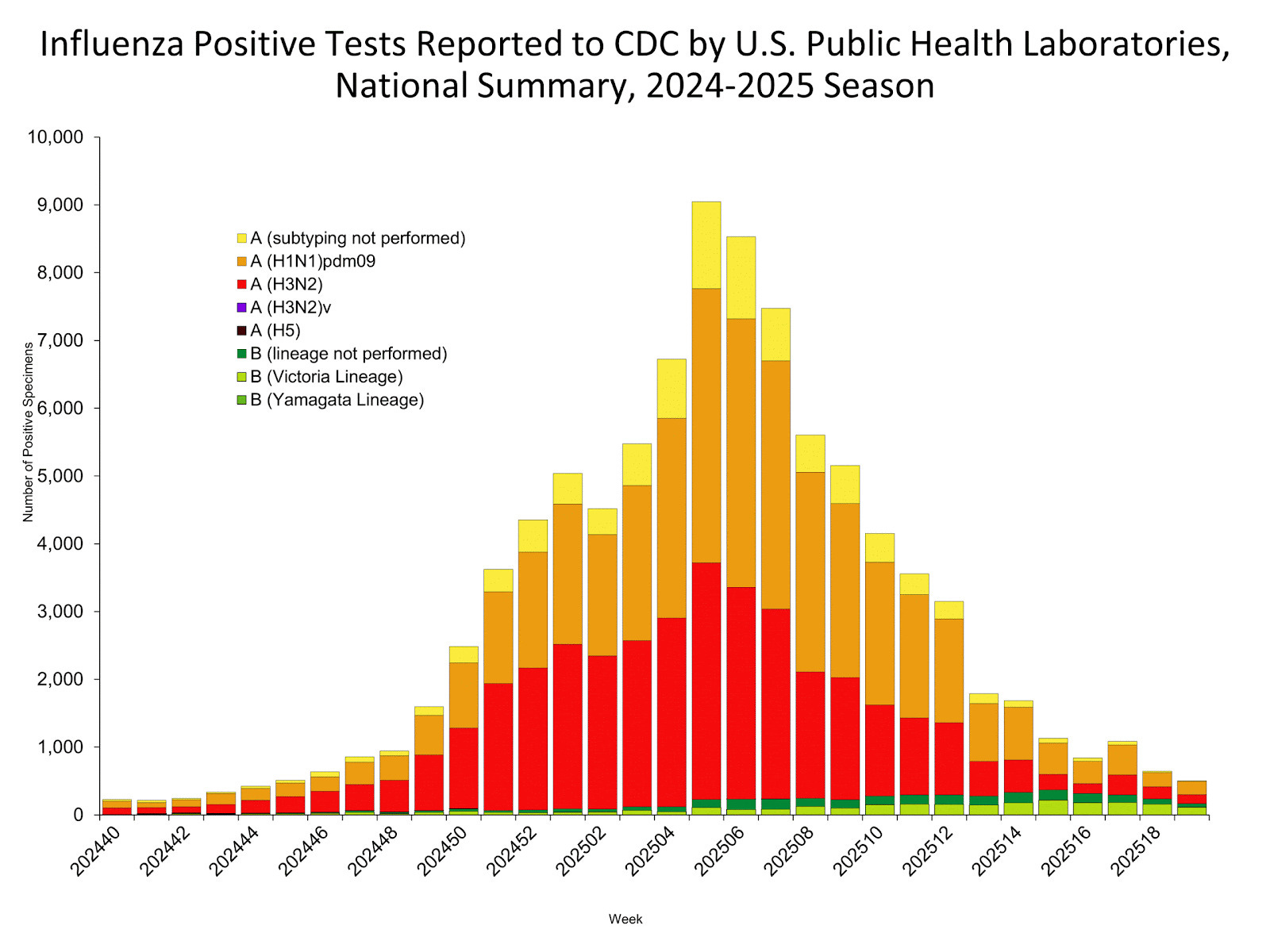
Different flu subtypes over time, 2024-25 season. Source: https://www.cdc.gov/fluview/surveillance/2025-week-19.html
Remember that if you do get the flu, there are effective antiviral treatment options that can shorten the duration and reduce your risk of severe disease, especially when started within 48 hours of infection. The flu typically comes on quickly and feels like you were hit by a truck, so don’t hesitate to reach out to your physician or pharmacy if you feel like it is coming on.
BOTTOM LINE
It’s not too late! Help yourself and others by getting a flu shot if you haven’t already.
Stay well,
Jenn
This post is a collaboration with Data for Health , Those Nerdy Girls, and the Dartmouth International Vaccine Initiative.